If you love crispy snacks filled with warm, spicy potatoes, this Simple Samosa Recipe is a great one to make at home. These homemade samosas have a crunchy, golden outer crust with a flavorful potato and green pea filling inside. They are perfect as an afternoon snack, party appetizer, Ramadan treat, or side dish.
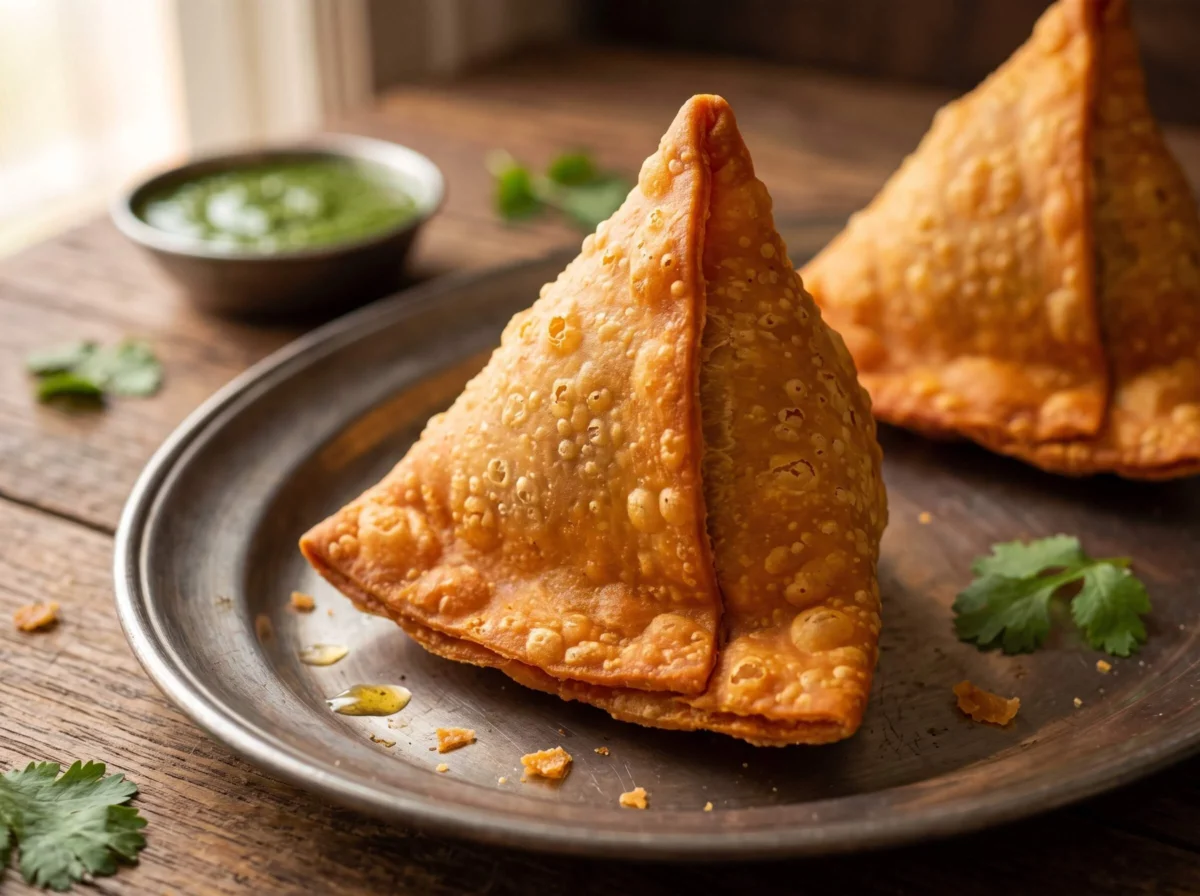
Making samosas from scratch may look difficult, but the process is actually quite simple when you break it into steps. First, you prepare a firm dough using all-purpose flour, oil or ghee, ajwain, salt, and water. Then you make an easy potato filling flavored with cumin, ginger, garlic, turmeric, chili powder, and garam masala.
The secret to getting crispy samosas is frying them slowly over medium-low heat. This allows the pastry to cook evenly and develop its classic flaky, crunchy texture without becoming covered in large bubbles.
Serve these homemade samosas hot with mint chutney, tamarind chutney, ketchup, or your favorite dipping sauce.
What is Simple Samosa Recipe?
A samosa is a popular savory snack made with a thin pastry shell filled with a seasoned mixture. Potato samosas are especially popular throughout South Asia and are commonly served in India, Bangladesh, Pakistan, and neighboring regions.
This Simple Samosa Recipe uses a traditional potato and green pea filling. Boiled potatoes are roughly mashed and mixed with peas, cumin seeds, ginger-garlic paste, turmeric, red chili powder, garam masala, and salt.
The filling is wrapped inside homemade pastry shaped into triangular pockets. The samosas are then slowly deep-fried until beautifully golden and crisp.
Although samosas can contain many different fillings, the potato version is one of the easiest and most familiar choices for homemade samosas.
Why You Will Love This Recipe
There are plenty of reasons to add this easy samosa recipe to your collection. It uses simple ingredients that are inexpensive and easy to find, while the homemade dough creates a much better crispy texture than many ready-made wrappers.
The filling is also easy to customize. You can reduce the chili powder for a mild samosa or increase it if you prefer something spicy.
Another advantage is that samosas work for almost any occasion. Serve them with afternoon tea, prepare them for family gatherings, add them to an appetizer platter, or enjoy them as a savory evening snack.
Best of all, the combination of the flaky crust, soft potatoes, sweet green peas, and warming spices makes every bite satisfying.
Equipment’s
You do not need special equipment to prepare homemade samosas. Have a large mixing bowl ready for making the dough, along with a medium frying pan for preparing the filling.
You will also need a rolling pin, clean rolling surface, knife or dough cutter, deep frying pan or heavy-bottomed pot, slotted spoon, and a plate lined with paper towels.
A small bowl of water is useful when shaping the samosas because water helps seal the pastry edges securely.
Ingredients With Amounts
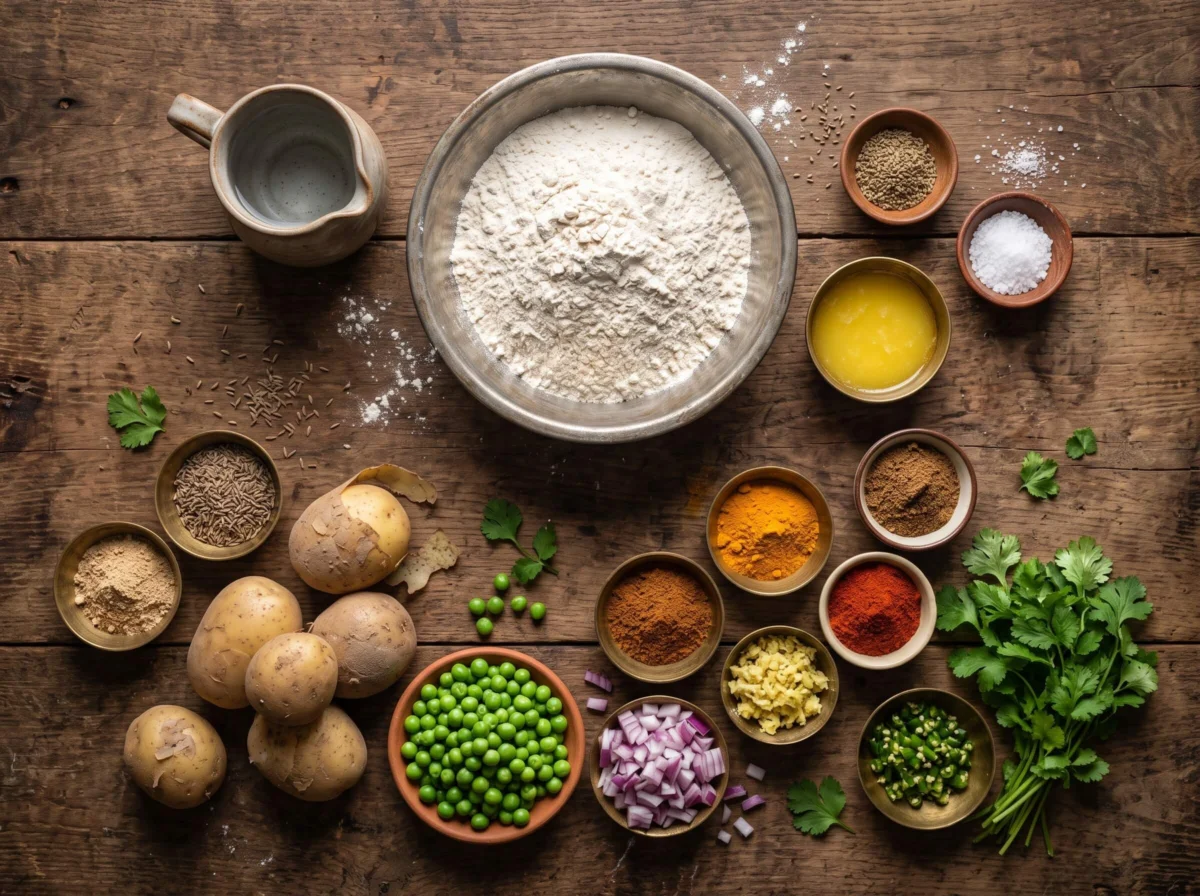
For the dough:
- 2 cups all-purpose flour (maida)
- 1/4 cup neutral oil or melted ghee
- 1/2 teaspoon ajwain (carom seeds)
- 1/2 teaspoon salt
- About 1/2 cup cold water
For the filling:
- 3 to 4 medium potatoes, boiled, peeled, and roughly mashed
- 1/2 cup green peas, fresh or frozen
- 1 tablespoon oil
- 1 teaspoon cumin seeds
- 1 teaspoon ginger-garlic paste
- 1/2 teaspoon turmeric powder
- 1/2 teaspoon red chili powder, or according to taste
- 1 teaspoon garam masala
- Salt to taste
For frying:
- Neutral cooking oil, as needed for deep frying
Instructions
1. Prepare the samosa dough. Add the all-purpose flour, salt, and ajwain to a large mixing bowl. Mix well. Add the oil or melted ghee and rub it into the flour using your fingertips. Continue until the flour has a coarse, crumb-like texture.
Gradually add cold water while mixing. Knead until you have a firm and stiff dough. Avoid making the dough too soft because a firm dough helps produce crispy samosas. Cover it with a damp cloth and rest for 20 minutes.
2. Prepare the potato filling. Heat 1 tablespoon of oil in a pan over medium heat. Add the cumin seeds and allow them to sizzle.
Add the ginger-garlic paste and cook for approximately 30 seconds. Stir in the turmeric powder, red chili powder, and green peas. Cook for about 2 minutes.
Add the roughly mashed potatoes, garam masala, and salt. Mix everything until the potatoes are evenly coated with the spices. Cook for another 3 minutes. Remove from the heat and allow the filling to cool completely.
3. Shape the samosa cones. Take a small ball of rested dough and roll it into an oval approximately 6 inches long. Cut the oval crosswise into two equal semicircles.
Run a wet finger along the straight edge of one semicircle. Bring the two ends together, slightly overlapping them. Press firmly along the seam to create a cone.
4. Fill and seal. Place about 1 to 1 1/2 tablespoons of cooled potato filling inside the cone. Do not overfill it.
Apply a little water around the inside of the open edges. Bring the edges together and pinch firmly until completely sealed.
Repeat with the remaining dough and filling.
5. Fry the samosas. Heat enough oil for deep frying in a heavy pan. Keep the temperature at medium-low. To test it, drop a tiny piece of dough into the oil. It should take a few seconds to slowly rise to the surface rather than immediately bubbling aggressively.
Carefully add the samosas without overcrowding the pan. Fry slowly for approximately 12 to 15 minutes, turning occasionally.
When they are crisp and evenly golden brown, remove them with a slotted spoon and drain on paper towels. Serve hot.
Check out our Easy Beetroot and Apple Puree for 6 Month Baby that you may like.
Notes
The potato filling should be completely cool before you begin stuffing the samosas. Hot filling can soften the dough and make shaping more difficult.
Add water gradually when preparing the dough. Depending on the flour, you may not need the entire 1/2 cup.
Keep unused dough covered while shaping the samosas so it does not dry out.
Most importantly, avoid frying samosas in extremely hot oil. Starting at a lower temperature helps create a crisp, evenly cooked pastry.
Variations
For a spicy samosa, increase the red chili powder or add finely chopped green chilies to the potato mixture.
For extra texture and flavor, you can add chopped fresh coriander leaves to the cooled filling.
You can also replace some of the potatoes with additional vegetables for a mixed vegetable samosa. Carrots and other firm vegetables can work well when cooked before filling.
For a richer pastry, use melted ghee instead of neutral oil when preparing the dough.
Tips
For the best crispy homemade samosas, keep the dough firm rather than soft. Rub the oil or ghee thoroughly into the flour before adding water because this contributes to the flaky texture.
Do not roll the pastry extremely thin. It needs enough thickness to hold the filling without tearing during frying.
Seal every edge carefully. Even a small opening can allow filling to escape into the hot oil.
Finally, be patient when frying. High heat may brown the outside quickly while leaving the pastry less crisp or unevenly cooked. Slow frying gives samosas their characteristic crunchy shell.
What to Serve With Simple Samosa?
Freshly fried samosas are delicious on their own, but dipping sauces make them even better.
Try serving them with green mint chutney, coriander chutney, sweet and tangy tamarind chutney, or tomato ketchup. A cup of hot masala chai or regular milk tea also pairs beautifully with crispy potato samosas.
For parties, arrange the samosas on a platter with two or three different dipping sauces so guests can choose their favorite.
How to Store Simple Samosa?
Allow leftover cooked samosas to cool completely before storing them. Place them in an airtight container and refrigerate for up to 3 days.
For the best texture, reheat refrigerated samosas in an oven or air fryer until the outside becomes hot and crisp again. Microwave reheating works, but the pastry can become softer.
You can also prepare the potato filling ahead of time. Store the cooled filling in a covered container in the refrigerator and use it when you are ready to assemble your samosas.
Check out our 10 Smart Home Kitchen Gadgets in 2027 that you may like
Frequently Asked Questions
Why are my homemade samosas not crispy?
Soft dough or frying at the wrong temperature can affect the texture. Use a firm dough and fry the samosas slowly over medium-low heat.
Why does my samosa crust have large bubbles?
Oil that is too hot can cause the pastry to bubble rapidly. Begin frying at a relatively low temperature and allow the samosas to cook gradually.
Can I make the samosa filling ahead of time?
Yes. Prepare the potato and pea filling ahead, cool it completely, and refrigerate it in an airtight container until needed.
Can I use frozen peas?
Yes. Both fresh and frozen green peas work well in this simple samosa recipe.
How do I stop samosas from opening while frying?
Moisten the edges lightly with water and press them together firmly. Make sure there are no gaps before putting the samosas into the oil.
What is the best oil for frying samosas?
A neutral cooking oil with a suitable high-heat frying point works well. Choose an oil that does not add a strong flavor to the pastry.
Conclusion
This Simple Samosa Recipe shows that making crispy potato samosas at home does not have to be complicated. A firm homemade dough, an easy spiced potato and green pea filling, careful sealing, and slow frying are the key steps.
The result is a batch of golden, crunchy samosas with a warm and flavorful center. Serve them fresh with mint chutney, tamarind chutney, ketchup, or hot tea for a satisfying homemade snack.
Once you become comfortable shaping the cones, homemade samosas are also easy to customize with different spices and fillings. Whether you are preparing a family snack, party appetizer, or tea-time treat, this easy potato samosa recipe is a delicious recipe worth keeping.