Starting solid foods is an exciting milestone, and simple homemade purees can be a great way to introduce new tastes and textures.
This beetroot and apple puree for a 6-month-old baby combines naturally sweet apple with earthy beetroot to create a smooth, colorful puree. It requires only a few simple steps and can be adjusted to a thinner or thicker consistency depending on your baby’s stage of feeding.
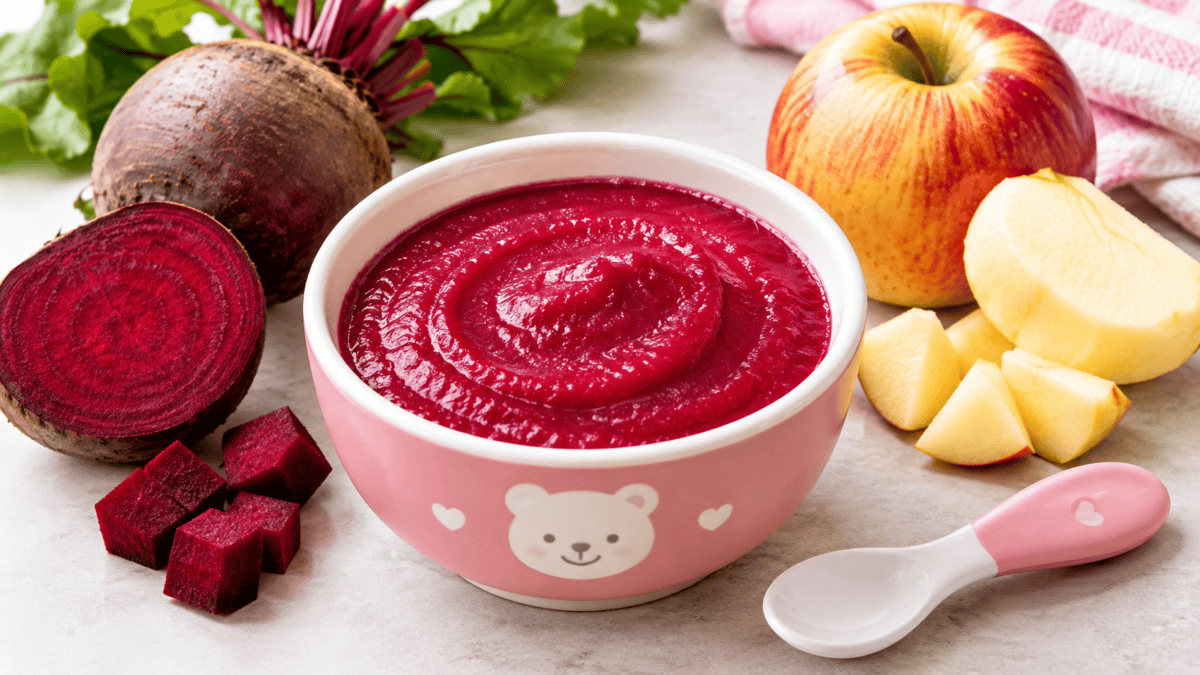
When introducing any new food, start with a small amount and watch your baby for any signs of an allergic reaction or difficulty swallowing.
3. Why This Puree Is Suitable for Babies
This recipe is designed around two simple ingredients:
- Beetroot – provides a naturally sweet, earthy flavor and soft texture when cooked.
- Apple – adds natural sweetness and helps create a smooth puree.
- No added sugar – the sweetness comes naturally from the fruit and vegetables.
- Simple texture – the ingredients can be blended until very smooth.
- Easy to prepare – suitable for parents looking for a straightforward homemade baby-food recipe.
For a baby who is beginning solids, the puree should be prepared to an appropriate smoothness and offered while the baby is sitting upright and supervised.
4. Ingredients
For approximately 2–4 small baby servings
- ½ small beetroot, peeled and chopped
- 1 small sweet apple, peeled, cored, and chopped
- 2–4 tablespoons water, as needed
Optional
You can add a little of the cooking water while blending to achieve the desired consistency.
Do not add:
- Salt
- Sugar
- Honey
- Artificial sweeteners
- Spices unless your baby’s healthcare professional has advised that they are appropriate
5. Ingredient Substitutions
You can make a few simple adjustments depending on what you have available.
Apple
A naturally sweet apple works particularly well. You can use another mild, sweet variety as long as it is fresh and properly prepared.
Beetroot
Fresh beetroot is ideal for this recipe. If using pre-cooked beetroot, make sure it is plain and does not contain added salt, sugar, sauces, or seasonings.
Water
You can adjust the amount of water according to the consistency you need. Add it gradually rather than all at once.
6. Step-by-Step Preparation
Step 1: Prepare the beetroot
Wash and peel the beetroot thoroughly. Cut it into small, similar-sized pieces so it cooks evenly.
Step 2: Prepare the apple
Wash the apple, peel it, remove the core and seeds, and cut it into small pieces.
Step 3: Cook the ingredients
Place the chopped beetroot and apple into a small saucepan or steamer.
Add enough water to cook the ingredients until they become completely soft.
Step 4: Check the texture
Pierce the beetroot and apple with a fork. They should be very soft and easy to mash.
Step 5: Blend
Transfer the cooked ingredients to a blender or food processor.
Blend until smooth.
Step 6: Adjust the consistency
Add a small amount of the cooking water and blend again if the puree is too thick.
7. Cooking Instructions
There are two easy ways to prepare this puree.
Option 1: Steam
Steaming can help soften the ingredients without requiring them to be submerged in water.
- Prepare the beetroot and apple.
- Place them in a steamer basket.
- Steam until both are very soft.
- Transfer to a blender.
- Blend until smooth.
- Add a little water if necessary.
Option 2: Simmer
- Add the chopped beetroot and apple to a small saucepan.
- Add enough water to soften them.
- Cook over medium-low heat.
- Continue cooking until both ingredients are fork-tender.
- Drain excess water if necessary.
- Blend until smooth.
The exact cooking time depends on the size of the pieces, so use softness rather than time alone as your guide.
8. Blending & Puree Consistency
For a baby who is just beginning solids, aim for a smooth, soft puree without hard pieces or chunks.
If the puree is:
Too thick:
Add 1 tablespoon of water and blend again.
Too thin:
Add a little more cooked beetroot or apple and blend again.
Too chunky:
Continue blending until the mixture reaches a smooth consistency.
Always check the puree yourself before serving to make sure there are no hard pieces.
9. How to Serve for a 6-Month-Old
Allow the puree to cool to a comfortable temperature before serving.
Serve your baby a small amount using a clean baby spoon while the baby is:
- Sitting upright
- Awake and alert
- Calm
- Closely supervised
If your baby is just starting solids, you can begin with a small spoonful and gradually offer more according to the baby’s appetite and feeding development.
Breast milk or infant formula generally remains an important source of nutrition during the early stages of complementary feeding.
10. Portion Guidance
There isn’t one fixed portion size that every 6-month-old should eat.
For a first introduction, a small spoonful is enough to start. If your baby enjoys the food and handles it comfortably, you can gradually increase the amount.
Follow your baby’s hunger and fullness cues rather than encouraging them to finish a specific portion.
Some babies may eat only a few spoonfuls at first, while others may eat more.
11. Storage and Reheating
If you make more puree than your baby needs immediately, proper storage is important.
Refrigerator
Place the freshly prepared puree into a clean, airtight container and refrigerate promptly.
For best quality, use homemade baby puree within 1–2 days.
Freezer
You can freeze small portions in clean, freezer-safe containers or baby-food trays.
Once frozen, transfer portions to a labeled freezer-safe container or bag.
Label the container with the preparation date.
Reheating
When serving a refrigerated or frozen portion:
- Reheat only the amount you plan to serve.
- Warm it thoroughly.
- Stir well.
- Allow it to cool before serving.
- Check the temperature before giving it to your baby.
Don’t repeatedly heat and cool the same portion.
Also, avoid feeding your baby directly from a storage container and then returning leftovers to the refrigerator, because saliva can introduce bacteria.
12. Food-Safety Precautions
Baby food requires careful preparation and storage.
Keep these points in mind:
- Wash your hands before preparing the food.
- Wash fruits and vegetables thoroughly.
- Use clean cooking utensils.
- Remove all apple seeds and the core.
- Peel the beetroot and apple for this smooth puree.
- Cook the ingredients until very soft.
- Make sure there are no hard pieces after blending.
- Store leftovers promptly.
- Keep prepared food refrigerated or frozen appropriately.
- Don’t leave prepared puree sitting at room temperature for an extended period.
- Never add honey to food for a baby under 12 months.
13. Allergy & New-Food Introduction Notes
Apple and beetroot are different foods, so if your baby has never eaten either ingredient before, you may want to introduce new foods individually first.
This can make it easier to identify which food may have caused a reaction if one occurs.
When introducing a new food, watch for signs such as:
- Hives or rash
- Swelling
- Vomiting
- Diarrhea
- Coughing or wheezing
- Breathing difficulty
If your baby develops breathing difficulty, significant swelling, or other signs of a severe allergic reaction, seek emergency medical care immediately.
If your baby has known food allergies, eczema, feeding difficulties, or other dietary concerns, speak with your pediatrician or healthcare professional about introducing new foods.
14. Common Mistakes to Avoid
1. Leaving apple seeds in the mixture
Always remove the core and seeds before cooking.
2. Not cooking the beetroot enough
Undercooked beetroot can remain firm and difficult to puree smoothly.
3. Making the puree too thick
A very thick puree may be difficult for a beginner to manage. Add a little water to achieve a smooth consistency appropriate for your baby’s feeding stage.
4. Adding sugar
The apple provides natural sweetness, so there is no need to add sugar.
5. Adding honey
Honey should not be given to babies under 12 months.
6. Making a large batch without proper storage
Prepare small portions and refrigerate or freeze them promptly.
7. Serving the puree too hot
Always check the temperature before feeding your baby.
You May Also Like:
15. Frequently Asked Questions
Can a 6-month-old eat beetroot and apple puree?
If your baby is developmentally ready for complementary foods, beetroot and apple can be prepared into a smooth puree. Introduce new foods in small amounts and supervise your baby while eating.
Should I cook the apple before making the puree?
For this recipe, yes. Cooking softens the apple and makes it easier to blend into a smooth consistency.
Do I need to add sugar?
No. The apple naturally provides sweetness.
Can I add breast milk to the puree?
If desired, some parents mix a small amount of breast milk into a cooled puree. Do not heat breast milk directly. Follow safe handling practices for expressed breast milk.
Can I freeze beetroot and apple puree?
Yes. Divide the puree into small freezer-safe portions, label them with the date, and thaw/reheat only the portion you plan to serve.
How smooth should the puree be?
For a baby beginning solids, aim for a smooth consistency appropriate to your baby’s developmental stage, without hard pieces.
Can I use beetroot and apple every day?
It is generally helpful to offer babies a variety of foods rather than relying on one particular puree every day. Variety exposes babies to different flavors, textures, and nutrients.
Why does beetroot make the puree red or pink?
Beetroot naturally contains strong red-purple pigments, so it can give the entire puree a vibrant pink or reddish color.
16. Nutrition Information
Because the nutritional values can vary considerably depending on the size and variety of the beetroot and apple, exact nutrition information should be calculated from the actual ingredients and serving size used.
This recipe provides foods from both the fruit and vegetable groups without added sugar or salt.
For babies, however, breast milk or infant formula remains an important source of nutrition during the early complementary-feeding period. Solid foods gradually become part of a varied diet as the baby develops.
17. Age-Appropriate Safety Notes
Before introducing solids, make sure your baby shows signs of developmental readiness and can safely manage food.
During feeding:
- Keep your baby sitting upright.
- Always supervise your baby while eating.
- Use an appropriately sized baby spoon.
- Keep food smooth and free from hard pieces when beginning purees.
- Never leave your baby alone with food.
- Don’t force your baby to eat.
- Pay attention to hunger and fullness cues.
Remember that gagging and choking are different, and parents/caregivers should learn infant choking first aid from a qualified source.
If you have concerns about whether your baby is ready for solids, speak with your pediatrician or another qualified healthcare professional.