This homemade kombucha recipe is a simple way to make a refreshing, tangy fermented tea in your own kitchen. With black or green tea, white sugar, starter kombucha, and a SCOBY, you can prepare a delicious batch with minimal effort. The fermentation process takes 7–14 days, allowing the tea to develop its signature sweet-and-sour flavor.
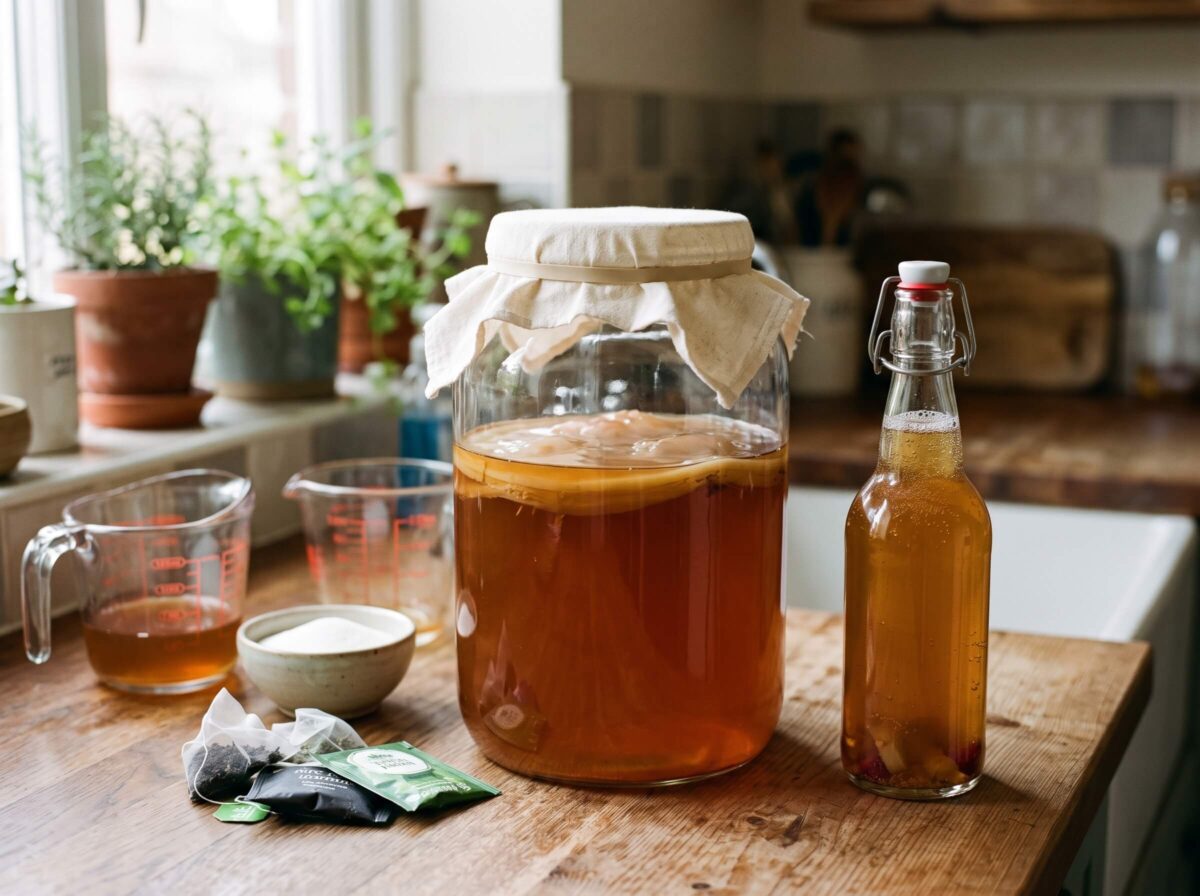
Kombucha is a fermented tea drink that can be enjoyed plain or flavored with fresh fruit, berries, lemon, or ginger. Once you understand the basic method, you can adjust the fermentation time and experiment with different flavors to suit your taste.
Making kombucha at home requires patience, clean equipment, and the right fermentation conditions. Most of the preparation takes only 15 minutes, while the culture does the rest of the work.
Whether you are new to fermented drinks or already enjoy kombucha, this easy homemade kombucha recipe will help you get started with confidence.
why you will love this recipe
- Easy to prepare: You need only a few basic ingredients and approximately 15 minutes of active preparation.
- Customizable flavor: Use black tea, green tea, berries, ginger, lemon, or other fruit to create your favorite combination.
- Adjustable sweetness: Ferment for a shorter or longer period to develop your preferred balance of sweetness and tartness.
- Perfect for homemade drinks: Make a batch for your refrigerator instead of purchasing bottled kombucha.
- Great for experimenting: Once you understand the first fermentation, you can explore naturally carbonated, fruit-flavored variations.
Kombucha contains live microorganisms when properly fermented, but its microbial content varies. Homemade kombucha is not guaranteed to provide specific health benefits.
equipment’s
Gather the following equipment before starting your homemade kombucha recipe:
- One clean 3–4 litre glass jar
- A medium saucepan for boiling water
- Measuring cups
- A clean spoon for stirring
- A breathable, tightly woven cloth
- A rubber band to secure the cloth
- Clean glass bottles for optional second fermentation
- A funnel for transferring the finished kombucha
- A clean tasting spoon
Use glass, food-grade stainless steel, or other suitable food-safe materials. Avoid reactive metals and damaged containers. For the second fermentation, use pressure-rated bottles designed for carbonated beverages.
Ingredients with amounts
This recipe makes approximately 3 litres of kombucha before optional flavor additions and fermentation losses.
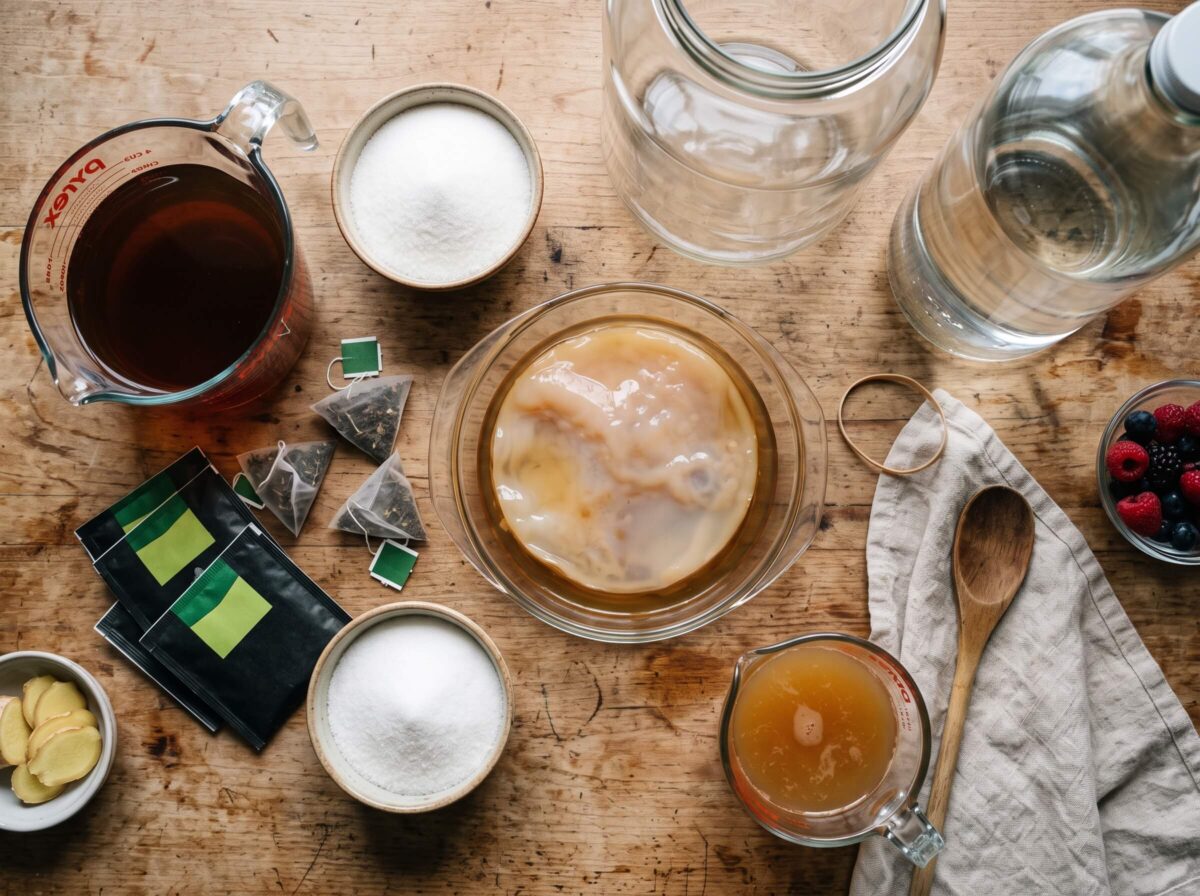
- Water: 4 cups for brewing the tea, plus filtered water to make 3 litres total
- Black or green tea bags: 4–6 bags
- White sugar: 1 cup
- Starter kombucha: 1 cup of unflavored, properly fermented kombucha
- SCOBY: 1 healthy kombucha culture
A SCOBY is a symbiotic culture of bacteria and yeast that helps ferment sweet tea. The starter kombucha makes the mixture acidic and helps establish suitable conditions for fermentation.
Use a healthy SCOBY and starter liquid from a reliable source. Do not use a moldy culture or a starter of uncertain safety.
instructions
Follow these simple steps to prepare homemade kombucha.
Step 1: Make the sweet tea
Bring 4 cups of water to a boil in a saucepan. Remove it from the heat and add 4–6 black or green tea bags. Let the tea steep for 10–15 minutes.
Remove the tea bags and stir in 1 cup of white sugar until it dissolves completely. Allow the sweet tea to cool to room temperature. Never add a SCOBY to hot tea because high temperatures can damage the culture.
Step 2: Fill the glass jar
Pour the cooled sweet tea into a clean 3–4 litre glass jar. Add filtered water until the total liquid volume reaches approximately 3 litres.
Make sure the mixture is completely cool before proceeding.
Step 3: Add the starter kombucha and SCOBY
Stir in 1 cup of starter kombucha. Gently place the SCOBY into the jar. It may float, sink, or move during fermentation; these changes alone do not indicate a problem.
Step 4: Ferment the kombucha
Cover the jar with a clean, breathable cloth and secure it with a rubber band. Keep it in a clean location away from direct sunlight, ideally at a stable temperature of 18–24°C.
Allow the kombucha to ferment for 7–14 days. Do not seal the jar during the first fermentation because the culture needs an appropriate breathable covering.
Step 5: Taste and check the kombucha
After 7 days, use a clean utensil to taste a small amount. If it is still too sweet, allow more fermentation time and check again.
The finished drink should develop a pleasantly tart flavor. Do not taste it if you notice fuzzy mold, unusual colored growth, or a rotten smell. Discard the entire batch if mold or other clear signs of contamination appear.
Step 6: Remove the SCOBY
When the flavor suits your preference, remove the SCOBY with clean hands or utensils. Reserve 1 cup of finished kombucha as starter liquid for your next batch.
Transfer the remaining kombucha into clean bottles if you want to enjoy it plain or add fruit flavors.
Step 7: Add flavor and develop fizz (optional)
For flavored kombucha, add a small amount of berries, lemon, ginger, or other prepared fruit to clean, pressure-rated bottles.
Seal the bottles and leave them at room temperature for 2–5 days to develop carbonation. Check them daily and handle them carefully because pressure can build quickly.
Refrigerate the bottles once the desired fizz develops. Chilling slows fermentation but does not stop it completely. Open bottles carefully over a sink.
Our Other Recipes:
notes
- Fermentation time depends on temperature, starter acidity, tea strength, and the activity of your culture.
- Use plain white sugar for predictable fermentation. Much of the sugar is used during fermentation, but some remains in the finished drink.
- A new cream-colored layer may develop on the surface. A smooth, moist new SCOBY is generally normal, while fuzzy or dry-looking mold is a warning sign.
- Avoid airtight containers during the first fermentation.
- Homemade kombucha may contain small amounts of alcohol, and the amount can increase during sealed second fermentation.
- Pregnant people, young children, immunocompromised individuals, and people advised to avoid alcohol should consult a qualified healthcare professional before consuming homemade kombucha.
- If you cannot verify safe fermentation conditions or identify contamination, discard the batch rather than trying to rescue it.
variations
Try these simple flavor combinations after the first fermentation.
- Ginger lemon kombucha: Add a few thin slices of fresh ginger and a little lemon juice for a bright, spicy taste.
- Berry kombucha: Combine mashed strawberries, blueberries, or raspberries with the finished tea for a fruity flavor.
- Apple cinnamon kombucha: Add a small amount of apple and a cinnamon stick for a warm, aromatic variation.
- Mango kombucha: Use ripe mango pieces for a tropical taste.
- Green tea kombucha: Use green tea bags instead of black tea for a lighter tea flavor.
- Mint lime kombucha: Add fresh mint leaves and a little lime juice for a refreshing finish.
Add fruit in moderation, especially during second fermentation, because fruit sugars can cause pressure to build rapidly in sealed bottles.
tips
- Start with clean equipment: Wash your hands, jar, utensils, and bottles thoroughly before use.
- Cool the tea completely: Heat can damage the SCOBY and affect fermentation.
- Maintain a steady temperature: Keep the jar in a clean area without direct sunlight or major temperature fluctuations.
- Taste regularly after day seven: This helps you find the right balance of sweetness and acidity.
- Use a reliable starter: A healthy SCOBY and sufficiently acidic starter liquid are important for a safer fermentation process.
- Be careful with carbonation: Use only pressure-rated bottles and refrigerate when the desired fizz develops.
- Do not rely on appearance alone: If you are unsure whether the batch is safe, discard it.
what to serve with Kombucha?
Homemade kombucha is a versatile drink that pairs well with a variety of foods.
Serve chilled kombucha alongside fresh fruit, vegetable salads, sandwiches, roasted vegetables, or light lunches. Ginger and lemon kombucha pairs nicely with spicy dishes, while berry kombucha complements fruit platters and simple desserts.
You can also serve it as a refreshing afternoon drink or offer different flavors at a family gathering. Pour small servings into glasses and add a slice of lemon or a few berries for an attractive presentation.
Remember that homemade kombucha can contain residual sugar and alcohol, so it may not be suitable for everyone.
how to store Kombucha?
Store finished kombucha in clean, tightly sealed bottles in the refrigerator. Refrigeration slows fermentation and helps preserve its flavor and carbonation.
For plain kombucha, refrigerate promptly after fermentation reaches your preferred taste. For flavored kombucha, refrigerate after the optional second fermentation has developed enough fizz.
Keep bottles away from heat and direct sunlight. Open carbonated bottles slowly, as pressure may have accumulated even in the refrigerator.
There is no universal safe storage period for homemade kombucha because acidity, sanitation, fermentation conditions, and bottling practices vary. Discard any drink with visible mold, an unpleasant rotten smell, or other suspicious changes.
If you are preparing a new batch, keep the reserved starter liquid with the SCOBY in a clean container and begin the next batch promptly.
Our Other Recipes:
Frequently Asked Questions
1. How long does homemade kombucha take to ferment?
The first fermentation usually takes 7–14 days. The exact time depends on the room temperature, starter culture, and your preferred sweetness. Optional second fermentation generally takes another 2–5 days.
2. Can I make kombucha with green tea?
Yes. Green tea works well in this recipe. Black tea is another popular choice. Use plain, unflavored tea rather than tea blends containing oils or other additives that may affect the culture.
3. Why is my SCOBY floating or sinking?
Both can occur during normal fermentation. The SCOBY may float, sink, tilt, or develop a new layer at the surface. Look for signs of contamination rather than judging the batch by its position alone.
4. Can I make kombucha without a SCOBY?
For a reliable home fermentation, use both a SCOBY and sufficient starter kombucha from a trustworthy source. The starter liquid helps acidify the sweet tea and establish suitable fermentation conditions.
5. Is homemade kombucha alcoholic?
It can contain alcohol because yeast produces alcohol during fermentation. The amount varies with the ingredients, temperature, fermentation time, and bottling conditions. Homemade kombucha is not guaranteed to be alcohol-free.
6. Why does my kombucha taste too sour?
It may have fermented longer than your preferred taste requires. Next time, begin tasting after day seven and stop the first fermentation when the flavor is pleasantly tart. Do not consume a batch that shows signs of contamination.
7. How do I make kombucha fizzy?
After the first fermentation, transfer the kombucha into pressure-rated bottles and add a small amount of fruit if desired. Seal for 2–5 days, check daily, and refrigerate once the carbonation is sufficient. Never use ordinary glass bottles that are not designed to withstand pressure.
8. Can I reduce the sugar in this recipe?
Do not substantially reduce the sugar in the initial recipe without a tested alternative method. Sugar supplies food for the yeast and bacteria, and changing the amount can affect fermentation. Some sugar will remain in the finished drink.
conclusion
This homemade kombucha recipe makes it easy to prepare a tangy fermented tea using simple ingredients and a little patience. With 15 minutes of preparation and 7–14 days of first fermentation, you can create a customizable drink that tastes delicious plain or with your favorite fruit flavors.
Remember to use clean equipment, a reliable SCOBY and starter liquid, suitable fermentation conditions, and pressure-rated bottles for carbonation. Start with the basic recipe, experiment with ginger, lemon, or berries, and find the flavor you enjoy most.


